Multiplier Interactions in Multi-Tiered Bonus Systems for Digital Slot Experiences

Digital slot games rely on structured bonus rounds that layer multiple features together, and multipliers form a core part of how these layers build value through successive rounds. Researchers who examine game mathematics have documented how multipliers activate during free spins or pick-and-click sequences, then compound when additional rounds trigger on top of existing ones. Data from industry reports indicate that these systems appear in titles released across multiple markets, with mechanics that adjust payout potential based on the number of layers reached during play sessions.
Core Structure of Layered Bonus Rounds
Bonus rounds in digital slots often begin with a base trigger such as three scatter symbols, which opens an initial set of free spins or a selection phase. Additional layers activate when specific symbols land again during the round, extending the feature or introducing new multipliers. Observers note that this stacking creates sequences where each new layer references the previous state, so a multiplier applied early continues to influence later spins unless the game rules specify a reset. Studies from academic sources on random number generator behavior show that these layered designs maintain consistent probability distributions even as features accumulate.
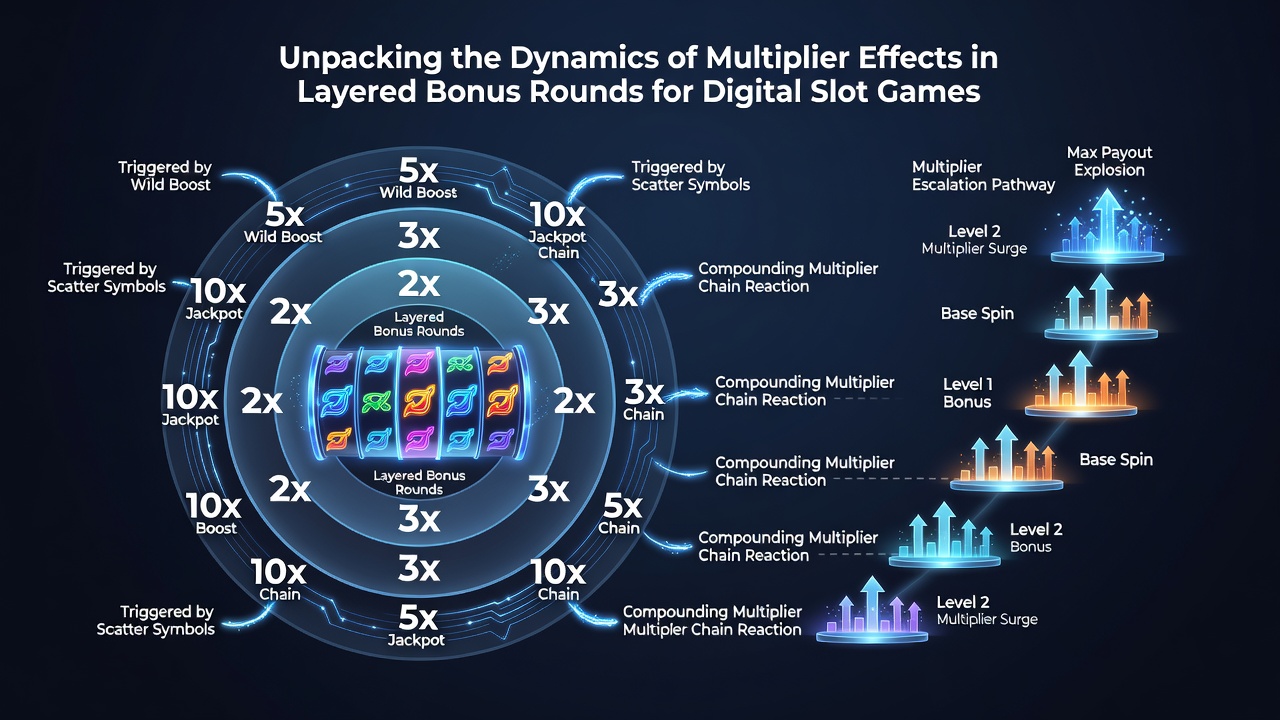
Game developers program these layers using defined rules that determine when multipliers increase, remain constant, or combine with other modifiers. For instance, one common pattern involves a 2x multiplier on the first layer that becomes 3x if a retrigger occurs, while symbols collected during the round add further increments. Figures from testing laboratories confirm that such rules undergo verification to ensure outcomes align with published return-to-player percentages across extended play cycles.
How Multipliers Apply Across Successive Layers
Multipliers function by scaling the base payout of winning combinations that form during the bonus round. When layers stack, the game applies the current multiplier to each spin result before moving to the next layer. Experts who analyze slot mathematics have observed that some titles calculate multipliers additively while others use multiplicative formulas, which produces different distribution curves for final payouts. A 2x multiplier applied to a 5x layer yields 10x in multiplicative systems, whereas additive versions might reach only 7x under the same inputs.
Layer transitions often coincide with symbol collections or meter fills that players trigger through specific reel outcomes. Research indicates these mechanics encourage continued engagement within the round because each new layer carries forward any active multipliers. Testing data released in early 2026 demonstrates that games incorporating five or more potential layers show wider variance in session results compared with simpler two-layer structures, yet the overall return-to-player remains within regulatory tolerances.
Observed Patterns in Game Implementations
Analyses of titles launched between 2024 and 2026 reveal recurring approaches to multiplier placement. Some games attach multipliers directly to bonus symbols that appear during free spins, while others tie them to progressive meters that fill across multiple rounds. Those who've reviewed paytable documentation note that rules frequently specify whether multipliers persist between layers or reset at the start of each new segment.
Regulatory testing in regions outside the United Kingdom, including oversight by the Nevada Gaming Control Board, requires verification that multiplier calculations produce expected long-term returns. Reports from this agency highlight instances where layered designs underwent adjustment after initial audits revealed discrepancies in how stacked multipliers interacted with wild substitutions. Similar reviews by the Malta Gaming Authority have addressed comparable cases in European-market releases.
One documented case involved a title where a base 1x multiplier scaled to 5x after four successive retriggers, with each layer adding incremental value to collected symbols. Data released by testing firms showed that players reaching the highest layers experienced payout multiples that aligned with the mathematical model published by the developer.
Technical Considerations in Multiplier Layering
Programming these systems requires precise handling of state variables that track active multipliers, remaining spins, and collected modifiers. Developers use conditional checks at the end of each spin to determine whether the next layer activates and how existing multipliers apply to new results. Software certification processes examine these checks to confirm they execute without introducing unintended biases.
Studies published in the Journal of Gambling Studies have examined player session data from various platforms and found that games with deeper layering tend to produce longer bonus round durations when multipliers continue to build. The research attributes this pattern to the increased number of decision points created by each successive layer, even though outcomes remain governed by the random number generator.
Conclusion
Layered bonus rounds with integrated multipliers represent a established design approach in digital slot development, supported by verified mathematical models and regulatory oversight from multiple jurisdictions. Information from testing laboratories and academic examinations continues to document how these features operate across different implementations. As of June 2026, ongoing releases demonstrate further refinements to layer transitions and multiplier application rules, while maintaining compliance with established standards for fairness and transparency.