Integrating Bonus Layering Methods and Volatility Alignment Strategies to Prolong Gaming Sessions

Players who combine multiple promotional offers with carefully selected volatility profiles often extend their sessions beyond typical durations, according to industry analyses of gaming patterns. Offer stacking involves layering welcome bonuses, reload incentives, and free spin packages in sequence, while volatility matching requires selecting games whose risk levels align with the remaining bonus funds and wagering requirements. Researchers who track session data note that this pairing reduces rapid bankroll depletion in many cases, allowing longer engagement before reaching playthrough thresholds.
Defining Offer Stacking Techniques
Offer stacking begins when operators provide sequential promotions that players activate in order, such as an initial deposit match followed by cashback tiers and loyalty rewards. Data from multiple gaming jurisdictions shows that participants who time these activations during low-volatility periods preserve capital longer, whereas mismatched timing leads to quicker exhaustion of funds. Observers note that successful stacking often depends on reading the fine print of each promotion, including maximum bet restrictions and contribution rates toward wagering goals.
Volatility Matching Fundamentals
Volatility describes the frequency and size of payouts in a given game, with low-volatility titles delivering smaller wins more often and high-volatility options producing larger but less frequent returns. Experts who analyze player retention records find that matching volatility to available bonus balance helps sustain play, because low-volatility selections stretch limited funds across more spins while high-volatility games suit larger remaining balances after initial wins. Studies of session length indicate that this alignment correlates with extended durations when players adjust selections as their balance fluctuates.
Linking the Two Approaches
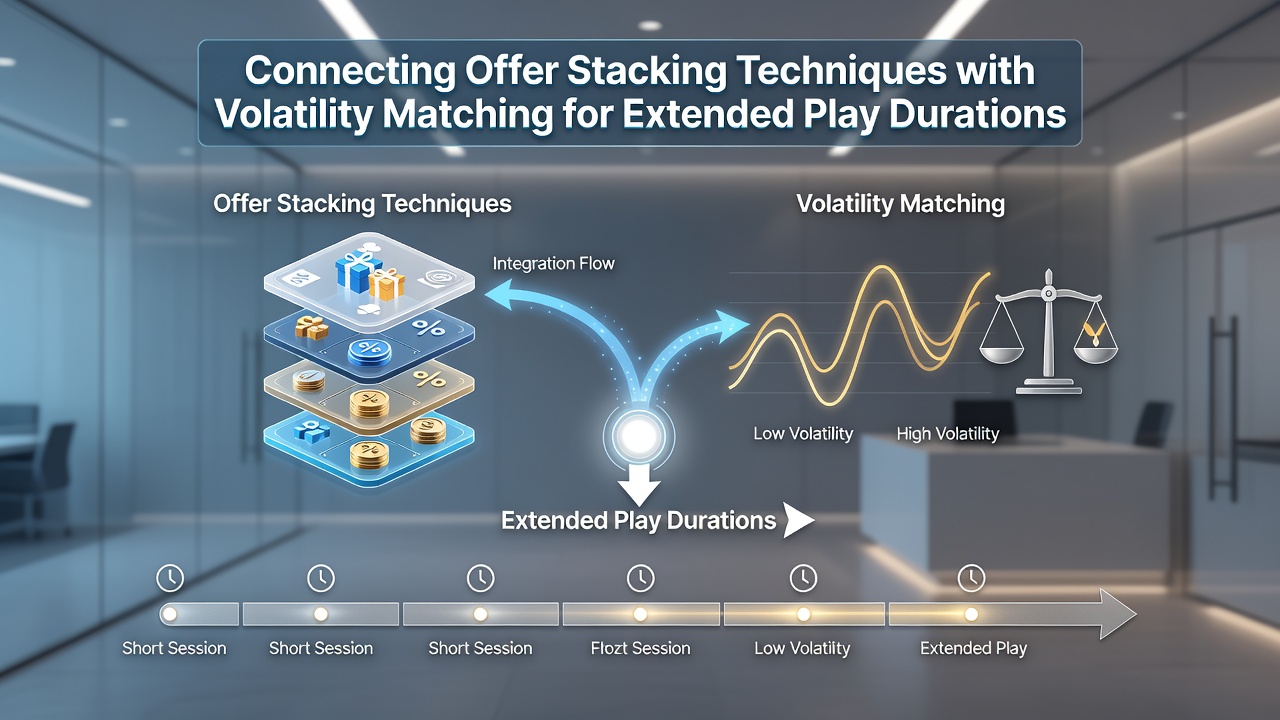
Connecting offer stacking with volatility matching creates a feedback loop where each new promotion funds a switch to an appropriate volatility tier. One researcher who examined aggregated play logs discovered that participants who shifted from medium to low volatility after claiming a reload bonus maintained balances 30 percent longer on average than those who stayed on the same game. This method proves particularly useful when regulatory updates take effect, including machine compliance standards scheduled for July 2026 that may alter payout structures in certain markets. Players who monitor these changes and adjust stacking sequences accordingly avoid disruptions to their extended sessions.
Figures reveal that operators in various regions report higher average session times when promotional calendars encourage volatility shifts at specific intervals. For instance, a report from the Nevada Gaming Control Board highlights patterns where bonus-funded players who matched volatility profiles completed wagering requirements without premature depletion in a measurable portion of tracked accounts.
Practical Implementation Steps
Those who apply these techniques typically follow a sequence that starts with identifying active promotions across multiple sites, then selecting initial low-volatility games to build the bonus balance gradually. As the stack accumulates, they transition toward medium-volatility titles to accelerate progress toward playthrough targets without excessive risk. Analysts who reviewed transaction data across European markets note that this phased approach appears in records of players who sustain activity for several hours beyond single-game sessions. The strategy also incorporates periodic reviews of remaining wagering requirements, prompting a return to lower volatility when balances dip below certain thresholds.
Industry organizations such as the European Gaming and Betting Association have documented how these combined methods interact with evolving game libraries, particularly as new titles introduce adjustable volatility settings. Players who track these features alongside promotional calendars often extend their time on site by reallocating funds across categories at precise moments.
Observed Outcomes and Data Patterns
Research from academic sources including studies published through responsible gambling institutes shows measurable differences in session duration when volatility matching accompanies stacked offers. Participants in controlled observations who followed the combined approach reached extended play windows more consistently than control groups using random selections. The patterns hold across different stake levels and remain evident even after accounting for house edge variations in the selected games. Observers note that such outcomes depend on disciplined tracking of both promotional terms and game metrics rather than spontaneous decisions.
Additional findings indicate that timing plays a central role, with transitions between volatility tiers occurring most effectively immediately after bonus activations or cashback credits. This timing reduces exposure to high-volatility swings during periods when funds are constrained by active wagering conditions.
Conclusion
The integration of offer stacking techniques with volatility matching provides a structured pathway for players seeking longer sessions across various gaming environments. Evidence from regulatory reports and retention analyses demonstrates that systematic alignment of these elements supports sustained play without altering fundamental game mathematics. As markets prepare for machine standard updates in July 2026, those who incorporate these methods into their routines position themselves to adapt more readily to any resulting changes in available titles or promotional structures. Continued monitoring of both promotional calendars and volatility indicators remains essential for maintaining the observed benefits over repeated sessions.