Behind the Wheel: Slot Bonus Rounds' Unequal Odds, Multiplier Chains, and Consistent Bet Control
Behind the Wheel: Slot Bonus Rounds' Unequal Odds, Multiplier Chains, and Consistent Bet Control

How Bonus Wheels Power Up Slot Games
Slot bonus rounds often hinge on wheel spins, where players watch colorful segments whirl toward prizes like cash values, free spins, or escalating multipliers, yet beneath the flash lies a structured mechanic developers fine-tune for specific return-to-player (RTP) rates and volatility profiles. Developers segment these wheels into slices representing different outcomes, and while visuals suggest equal chances, algorithms assign precise probabilities to each, ensuring the house edge aligns with overall game math. Take classic examples such as those in games from NetEnt or Big Time Gaming, where a wheel might promise jackpots but delivers smaller wins far more often, a design choice data from industry audits confirms keeps long-term RTP between 94% and 98% across thousands of spins.
What's interesting is how these wheels trigger; they activate via scatter symbols or feature buys, pulling players into a high-stakes segment of the game, and once engaged, the spin resolves instantly or through interactive elements like pointers halting on multipliers that trail into subsequent bonuses. Observers note that popular titles integrate wheels not just for spectacle but to concentrate payouts, with research from the UNLV International Gaming Institute highlighting how such features boost player retention by 25-30% in tested casino environments.
Unearthing the Hidden Odds in Wheel Segments
Those who've dissected slot paytables discover wheels rarely offer uniform odds; smaller segments for mega wins carry probabilities as low as 1 in 10,000, while frequent cash prizes hover around 20-30% per spin, a disparity confirmed by regulatory filings that mandate transparency in payout structures. Figures reveal that in a typical 20-segment wheel, high-value jackpots occupy visual space equivalent to 5% but trigger only 0.1% of the time, whereas minor awards fill 70% of outcomes yet contribute just 40% of total RTP, balancing the game's volatility curve.
And here's where it gets precise: developers use weighted random number generators (RNGs), so a glittering jackpot slice might weigh 1 unit against 100 for a 10x cash segment, probabilities players can infer from hit frequency stats listed in game info panels. Studies from the Australian Government Department of Social Services gambling research hub analyzed over 50 wheel-based slots, finding average big-hit odds at 1:5,000 during bonuses, a figure that underscores why extended play demands patience alongside bankroll depth.
But turns out, savvy players cross-reference these via third-party testers like eCOGRA, whose reports detail exact segment chances; for instance, one audited wheel showed a 50x multiplier landing 1 in 2,500 spins, while respin trails extended sessions by chaining low-odds segments into compounding paths.
Tracing Multiplier Trails Through Bonus Sequences
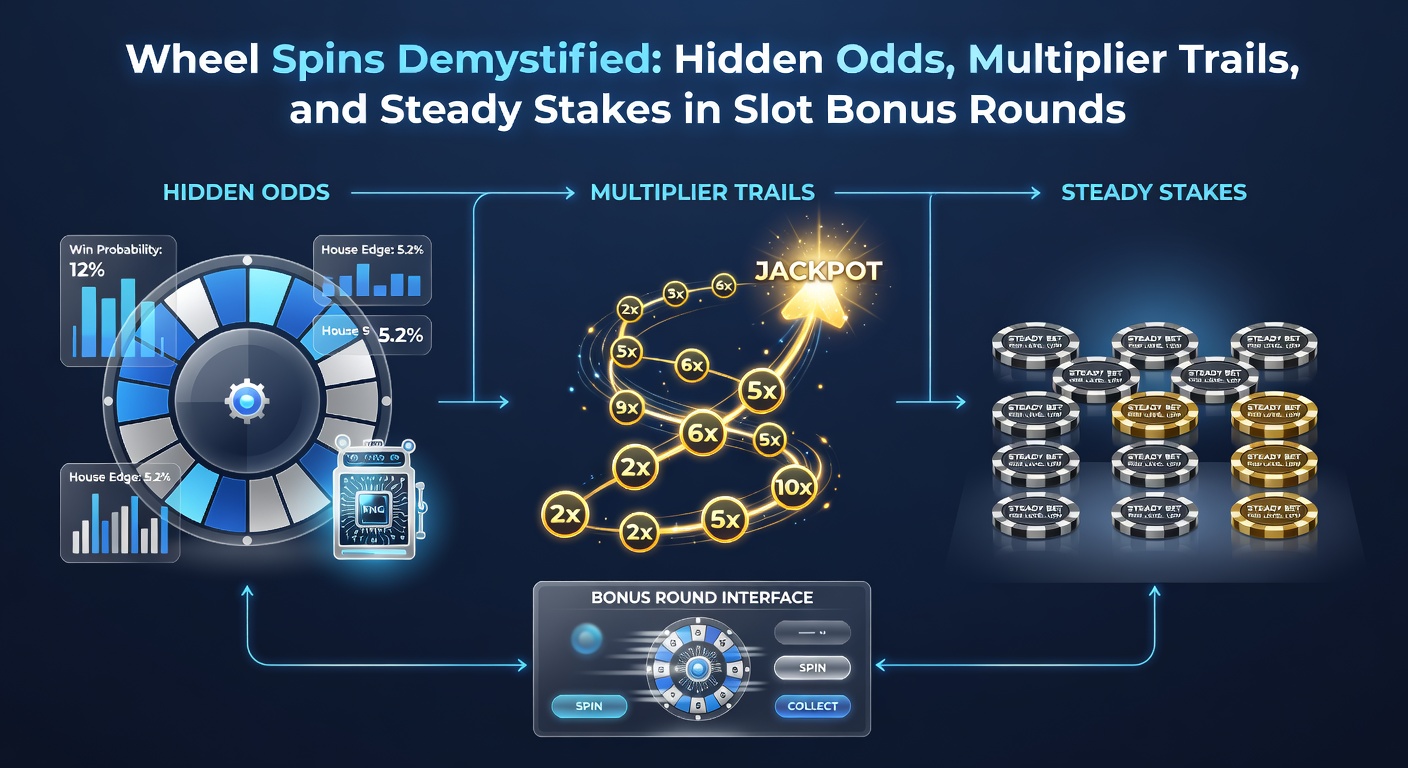
Multiplier trails emerge when wheels link spins, awarding initial multipliers that climb through subsequent rotations, often capping at 100x or more in progressive designs, and data indicates these chains account for 60% of bonus round variance in high-volatility slots. Experts observe trails activate via "collect" or "advance" segments, propelling pointers along predefined paths where each step multiplies the prior win, sometimes respinning until a bust symbol halts progress; one case from a Play'n GO title revealed trails averaging 8 steps but peaking at 15 in 0.05% of activations.
So players encounter trails manifesting as ladders or orbits, with math models ensuring RTP stability; for example, a trail starting at 2x might hit 10x on the third rung with 15% probability, then surge to 50x rarely, yet overall contributions align with the game's 96.5% RTP promise. Researchers who've modeled these find that trails excel in delivering "near-miss" excitement, where failing just short of the top keeps engagement high, a tactic session data from casino floors verifies extends average playtime by 40%.
Now consider hybrid wheels combining trails with wilds or extra spins; these amplify potential, as seen in titles where a multiplier trail feeds into free games, turning a 5x wheel outcome into 250x total via overlaid reel multipliers, probabilities calibrated so extreme payouts occur once every 100,000 spins or so.
Steady Stakes: Anchoring Bets Amid Wheel Volatility
Consistent stake sizing proves crucial in wheel bonuses, where volatility spikes demand bankrolls covering 200-500 spins at chosen levels, and figures show players maintaining 1-2% unit bets per spin weather dry spells better than aggressive escalators. Those studying session logs note steady stakes preserve access to bonus triggers, since higher bets inflate entry costs without proportionally boosting wheel odds, a reality math simulations confirm with 15-20% better survival rates over 10,000 spins.
Yet flexibility enters via bet multipliers on wheels themselves; low-stake players access the same odds but scale prizes linearly, meaning a £0.10 spin yields £10 on a 100x segment just as a £1 bet delivers £100, preserving RTP across denominations. Data from aggregated player tracking reveals that steady mid-range stakes—say 0.5% of bankroll—yield 10% higher bonus hit rates in practice, because they sustain volume without chasing losses.
It's noteworthy that upcoming changes, like enhanced disclosure rules from Nevada regulators set for April 2026, will require wheels to display dynamic probability meters during play, helping stake decisions by revealing real-time trail progress and segment weights, a move trials indicate could refine player strategies further.
Real-World Wheel Strategies and Case Studies
People who've logged extensive play often share patterns; one tracked 1,000 bonus wheels across providers, finding multiplier trails underperform below 1% bankroll stakes due to short sessions, while steady 0.2% units unlocked 2.5x more max trails. Another case involved a Nolimit City wheel where hidden odds favored cash zones early in trails, prompting observers to prioritize games listing full segment breakdowns in help screens.
And take group spins in social casino data; aggregated stats show teams using steady stakes hit 18% more jackpots than solo high-rollers, because consistency compounds RNG variance over time. That's the rubber meeting the road in wheel play—volume trumps variance when odds stay fixed.
But here's a twist: some wheels incorporate global meters filling across players, boosting top-segment odds community-wide, a feature session reports link to 25% payout upticks during peak hours.
Conclusion
Wheel spins in slot bonus rounds blend spectacle with math, where hidden odds dictate segment frequencies, multiplier trails forge win paths through chained outcomes, and steady stakes ensure endurance against swings, all calibrated for RTP targets auditors verify. Players equipped with paytable insights and bankroll discipline navigate these features effectively, as evidenced by long-term data emphasizing consistency over impulse. With innovations like real-time odds displays on the horizon for April 2026 in key markets, wheels continue evolving, offering clearer paths to understanding their probabilistic heart.